How Trazodone Reshapes the Sleeping Brain: A Clinical Case for Moving Beyond Benzodiazepines
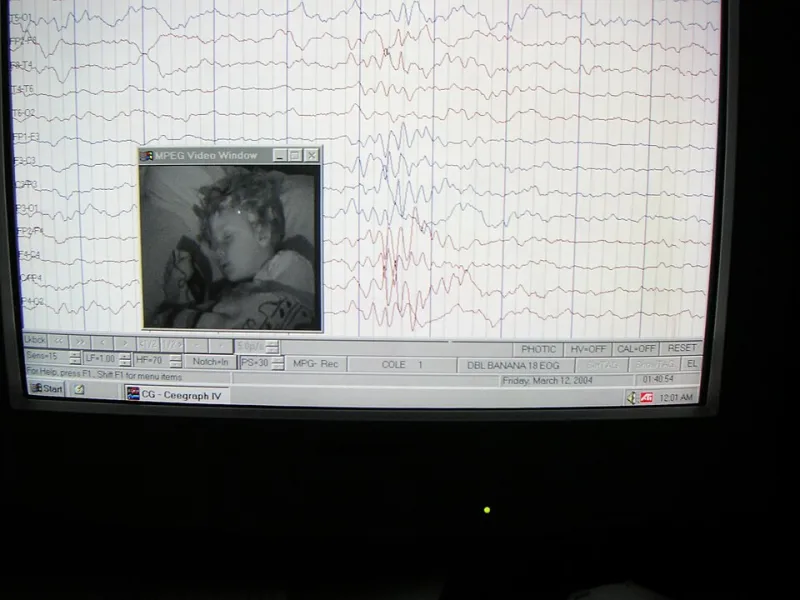
Photo: Jemaleddin Cole from Glen Burnie, USA, CC BY-SA 2.0, via Wikimedia Commons
For decades, the go-to pharmacological response to insomnia in the United States has been the benzodiazepine—or more recently, the non-benzodiazepine "Z-drug" such as zolpidem or eszopiclone. These agents work quickly, patients recognize them by name, and they produce an unambiguous sedative effect. Yet a growing body of clinical literature suggests that for a substantial subset of patients—particularly those whose insomnia coexists with depression or anxiety—trazodone may represent a more physiologically sound alternative. Understanding why requires a close look at what actually happens inside the sleeping brain.
What Sleep Architecture Actually Means
Sleep is not a uniform state of unconsciousness. It is a cyclical, highly organized neurological process comprising distinct stages: light non-REM sleep (N1 and N2), deep slow-wave sleep (N3), and rapid eye movement (REM) sleep. Each stage serves a different restorative function. N3 sleep is associated with physical recovery, immune regulation, and memory consolidation. REM sleep—the stage during which most vivid dreaming occurs—plays a critical role in emotional processing, learning, and mood regulation.
When clinicians speak of "sleep architecture," they are referring to the proportion of time spent in each stage and the orderly progression through sleep cycles across the night. A medication that produces sleep is not automatically a medication that produces healthy sleep. This distinction is where trazodone begins to separate itself from its competitors.
The Benzodiazepine Problem: Sedation Without Restoration
Benzodiazepines and Z-drugs achieve their sedative effect primarily through positive allosteric modulation of GABA-A receptors—in essence, amplifying the brain's principal inhibitory signal. The result is rapid sedation, but at a cost to sleep quality that is well-documented in polysomnographic studies.
Specifically, benzodiazepines suppress slow-wave (N3) sleep and, to a lesser degree, distort REM sleep. Patients may fall asleep faster and stay asleep longer, but the sleep they obtain is architecturally shallow. Over time, this contributes to a phenomenon known as rebound insomnia—a worsening of sleep difficulty upon discontinuation—as well as tolerance, dependence, and next-day cognitive impairment. The U.S. Food and Drug Administration has issued increasingly prominent warnings about these risks, and prescribing guidelines from organizations such as the American Academy of Sleep Medicine now recommend against long-term benzodiazepine use for chronic insomnia.
Trazodone's Mechanism: Targeted Rather Than Blunt
Trazodone belongs to the serotonin antagonist and reuptake inhibitor (SARI) class of antidepressants. Its primary antidepressant action involves blocking the reuptake of serotonin at the presynaptic membrane while simultaneously antagonizing certain serotonin receptor subtypes, notably 5-HT2A and 5-HT2C. However, it is trazodone's secondary pharmacological properties that are most relevant to sleep.
At lower doses—typically in the range of 50 to 150 mg—trazodone exerts meaningful antagonism at histamine H1 receptors and alpha-1 adrenergic receptors. Histamine is a key wakefulness-promoting neurotransmitter; blocking its activity promotes sleep onset without the GABA-mediated suppression of restorative sleep stages. This is a fundamentally different mechanism than benzodiazepines, and the polysomnographic data reflect it.
Multiple controlled studies have demonstrated that trazodone increases slow-wave sleep (N3) rather than suppressing it. Some research also suggests that trazodone either preserves or modestly enhances REM sleep, in contrast to the REM suppression associated with many other antidepressants and conventional sedatives. For patients with depression—a condition already characterized by disrupted REM patterns and reduced slow-wave sleep—this profile is clinically significant.
The Serotonin 5-HT2A Connection
The 5-HT2A receptor antagonism deserves particular attention. Activation of 5-HT2A receptors is associated with lighter, more fragmented sleep and reduced slow-wave activity. By blocking these receptors, trazodone effectively removes a brake on deep sleep. This mechanism is shared, to varying degrees, by other agents such as mirtazapine and quetiapine, but trazodone's receptor binding profile makes it particularly well-suited to low-dose sleep applications without the metabolic side effects associated with those alternatives.
Comorbid Depression and Insomnia: A Clinical Overlap That Matters
Approximately 40 to 60 percent of patients with major depressive disorder also meet diagnostic criteria for insomnia. The relationship is bidirectional: poor sleep worsens depressive symptoms, and depression disrupts sleep. Prescribing a benzodiazepine for the insomnia component addresses only one dimension of this overlap—and does so imperfectly—while doing nothing to address the underlying mood disorder.
Trazodone, by contrast, addresses both dimensions within a single pharmacological agent. At doses of 50 to 100 mg, it provides meaningful sleep benefit. When titrated to antidepressant dosing ranges (300 to 400 mg or higher), it continues to offer sedative properties while actively treating depressive pathology. For the clinician managing a patient with comorbid conditions, this dual utility represents a genuine therapeutic advantage.
Real-World Considerations for U.S. Patients
In American clinical practice, trazodone is already one of the most commonly prescribed medications for insomnia, frequently used off-label at sub-antidepressant doses. Its generic availability makes it substantially more affordable than branded sleep aids, and its non-scheduled status under the DEA means it carries no federal controlled substance restrictions—an important consideration for patients and prescribers alike.
Side effects are not absent. Trazodone can cause next-day sedation, orthostatic hypotension (a drop in blood pressure upon standing), and—rarely—a condition called priapism in male patients. Patients should discuss these risks candidly with their prescribing physician. Nonetheless, the side effect profile compares favorably to benzodiazepines in most long-term assessments.
What Patients Should Discuss With Their Provider
If you are currently relying on a benzodiazepine or Z-drug for sleep and are experiencing insufficient restorative benefit, persistent daytime fatigue, or concerns about dependence, trazodone represents a clinically supported alternative worth discussing. Patients with concurrent depressive symptoms are particularly strong candidates for this conversation.
Key questions to raise include: whether the current sleep medication is preserving or disrupting deep sleep stages; whether an underlying mood disorder may be contributing to insomnia; and whether a trial of trazodone at a low dose might be appropriate as either a standalone therapy or an adjunct to existing treatment.
Conclusion
The science of sleep pharmacology has advanced considerably beyond the era of simple sedation. Trazodone's ability to enhance slow-wave sleep, preserve REM architecture, and address comorbid depression within a single, non-scheduled, widely affordable medication positions it as one of the more clinically sophisticated options available to American patients managing chronic insomnia. For those whose sleep difficulties are intertwined with mood disturbance, the pharmacological case for trazodone is not merely plausible—it is compelling.